

Feeling stuck? Here’s a different way to think about change
Real change rarely comes from the common belief that we simply need to push ourselves harder. Instead there’s another – more paradoxical – theory for change: that lasting transformation grows from deeper acceptance of who we actually are, not through effort or striving to be someone else.
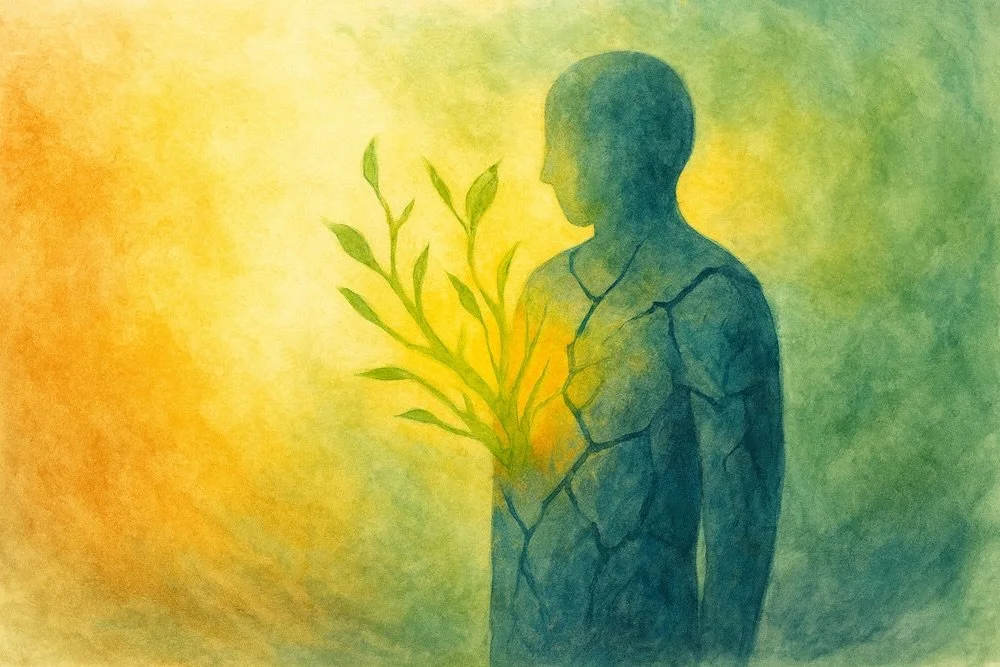
Change… and its challenges
There’s a particular kind of stuckness that many people bring to therapy. A sense of: “Why am I like this? I want to be like… that. I’ve tried everything… and nothing shifts.”
You may know exactly how you want to feel – perhaps calmer, kinder to yourself, more confident, less reactive – but still you find yourself repeating the same patterns. The gap between intention and reality can feel baffling and deeply frustrating.
In those moments, it’s easy to turn inwards and blame yourself. Many people assume they are the problem: not trying hard enough, not disciplined enough, not motivated enough, or that they are flawed in all sorts of other ways.
This effort-based approach rests on a familiar idea: If I just push myself harder, I’ll finally change.
But there’s another way of understanding change – one that can feel surprisingly relieving when you’re tired of striving, fixing or forcing yourself forward. This is where the paradoxical theory of change comes in. Its central idea is simple but powerful:
Lasting change doesn’t come from trying to become someone different. It comes from becoming more fully who you already are – including the parts you struggle with and wish didn’t exist.
Why pushing ourselves rarely works
So let’s look at the more common cultural view of change. Most of us have been told, implicitly or explicitly, to:
try harder
think positively
stop doing that
be better
be different!
It sounds logical. But notice what actually happens inside when you push yourself like this. Often, you tighten. You contract. A part of you resists. Or you blame yourself when it doesn’t work. Or you collapse because you “should” be able to do what others tell you to do.
These reactions aren’t signs of failure. They’re protective responses – patterns that have developed over time to keep you safe. And when you try to force yourself to change, those protective systems often double down.
The paradoxical theory of change invites a different approach: instead of battling those parts, we get curious about them. We make space for them. And over time, if it feels possible, we begin to soften towards them and perhaps even welcome them as the protective allies they have been trying to be.
Acceptance isn’t giving up – it’s what allows movement
The paradox is that when we stop trying to be different, we create the conditions for something new to emerge. Not because we’ve “given up” but because we’ve made space for honesty:
This is how I actually feel.
This is what hurts.
This is what I’m afraid might happen if things change – or don’t change.
This is the part of me that steps in to protect me – to try and keep me safe.
When these truths can be named and held without judgment, something loosens. Old patterns soften. The system doesn’t need to brace or dig its heels in. And from that gentler space, change becomes possible – often in ways you could never have forced from the outside.
What this process can look like in therapy
In our work together, this might involve:
exploring what feels blocked or resistant without trying to “fix” it
making space for the parts of you you’ve spent years unaware of, criticising or hiding
noticing what happens moment to moment – in your body, breath, tone, emotion, and inner story
understanding the protective roles these patterns have played
discovering what becomes possible when the internal pressure eases
gradually learning to include rather than exile these parts.
Instead of “What’s wrong with me, and how do I change?”, we can begin with gentler questions: “What’s happening for me right now? What am I noticing in myself? And how do I respond – internally and externally – to what I’m experiencing?”
From this “what and how” place, new awareness of who you are – and who you’ve been for so long – can begin to grow. And from there, gradual, real and lasting change can unfold: in how you treat yourself, how you show up in relationships, the choices you make, and the sense of freedom you feel inside.
When change feels impossible, you’re not failing – you’re protecting yourself
Stuckness is rarely laziness or lack of willpower. More often, it’s a sign that some part of you doesn’t yet feel safe enough to loosen its grip.
Therapy offers a space where those parts can breathe – where they can be understood rather than pushed aside. And from there, movement becomes possible again.
If you’re feeling stuck, frustrated or caught in familiar loops, you’re not alone. And if you’d like support with this work, please get in touch to arrange a free 20-minute introductory call.